Piano models and buying guide
Piano models and buying guide
Piano models and buying guide catalog is a comprehensive guide prepared at Royal.az to make choosing a piano easier, clearer, and more accurate. Here, you can compare piano models suitable for beginners, music school students, teachers, home practice, studio users, and professional pianists. When buying a piano, looking only at the price is not enough: keyboard touch, sound mechanism, pedal system, cabinet size, acoustic or electronic structure, brand reliability, area of use, and long-term comfort must be evaluated together.
The Royal Musical Instruments store offers a wide selection of pianos for sale, digital pianos, acoustic pianos, portable pianos, and grand piano models. Our goal is not just to display products, but to help the buyer choose the right model according to their needs.
First, define your purpose when choosing a piano
The most accurate piano choice begins with the purpose of use. If the piano is being bought for a child or adult beginner, the key issues are a comfortable keyboard, stable sound, headphone output, a compact cabinet, and practical functions for daily practice. For a piano chosen for music school and lessons, 88 keys, weighted action, correct pedal response, and a balanced tone for classical repertoire are essential. For models chosen for home interior, design, color, cabinet shape, and silent practice capability come to the fore. For stage, studio, and professional performance, dynamic range, sound engine, keyboard response speed, connectivity, and portability play a more serious role.
Digital pianos are a more practical choice for the beginner level: they do not require tuning, allow for silent practice with headphones, and are more affordable. At the intermediate and professional levels, models with higher-quality keyboard mechanics, a more powerful sound system, and a performance feel closer to an acoustic piano should be chosen. Acoustic pianos are the better choice for those who desire natural resonance, real string and hammer mechanics, long-lasting tone, and classical performance tradition.
Differences between digital piano, acoustic piano, and portable piano
Digital piano is the most popular type of piano for home, lessons, music schools, and silent practice. These models feature an 88-key weighted keyboard, built-in sound system, headphone output, various piano tones, a metronome, and sometimes Bluetooth, USB, and app support. The advantage of digital pianos is that they do not need tuning, are not as affected by temperature and humidity as acoustic pianos, and are very comfortable for daily use.
Acoustic piano provides the most natural piano feel with its real hammer-string mechanism and wooden resonance body. In an acoustic piano, key touch, sound propagation, dynamic nuances, and resonance are based on full physical mechanics. Acoustic pianos hold special value for classical education, conservatory preparation, professional performance, and long-term investment. For this type of piano, size, mechanics, material quality, manufacturer experience, and proper service are very important.
Portable piano is suitable for models that are transportable, lightweight, and practical. For users who want to take it to the stage, save space at home, or carry it to lessons and events, a portable piano can be an ideal choice. These models are lighter than cabinet-style digital pianos, but good models still offer an 88-key weighted keyboard and high-quality piano sound.
Grand piano is for those who want the highest level of acoustic performance experience. In grand pianos, the sound is wider, the resonance is richer, the mechanics are more sensitive, and the stage performance is more powerful. For large halls, professional stages, music academies, and serious pianists, grand piano models are one of the most prestigious choices.
Which piano is most suitable for beginners?
For a beginner user, the most important condition is the correct keyboard feel. A person learning piano should practice with an 88-key, weighted, and dynamic-responsive keyboard as much as possible. This helps in the correct formation of finger technique and facilitates the transition to an acoustic piano in the future. It is more advisable to choose a digital piano instead of a very simple synthesizer for beginners, as the synthesizer keyboard is usually light and does not fully form classical piano technique.
For beginner and intermediate levels, models suitable for the budget and purpose can be chosen among Casio digital pianos, Medeli digital pianos, Roland pianos, and Kawai digital pianos. These types of models are very comfortable for home practice for children, hobbies for adults, and daily lessons and teacher-monitored practice for music school.
Selection for intermediate and professional levels
For a pianist moving to the intermediate level, the principle of "it has a piano sound" is no longer enough. The weight of the keys, layering of sounds, half-pedal response of the pedal, dynamic range, and overall playing feel should be evaluated more seriously. At this stage, more advanced keyboard mechanics, a more natural sound engine, and powerful cabinet acoustics are important in a digital piano. A professional user, when choosing a model, should consider the instrument's technical specifications as well as comfort for stage, studio, classical repertoire, and long hours of practice.
At the professional level, brands such as Kawai pianos, Roland, Casio pianos, Pearl River, Euphonia pianos, and Medeli offer models for various needs. For those who want acoustic sound, models like Kawai, Pearl River, Ritmuller, and Petrof stand out, while for those who want digital convenience, Roland, Kawai, Casio, Medeli, and Euphonia digital pianos are more prominent.
Why is keyboard mechanics important?
Keyboard mechanics is one of the most important parts of the instrument when choosing a piano. A good piano keyboard should respond correctly to the touch of the finger, clearly show the difference between soft and loud playing, not cause delays in fast passages, and not be tiring during long practice sessions. In digital pianos, terms like "weighted keys," "hammer action," and "graded hammer action" indicate that the keyboard is approximated to an acoustic piano. In acoustic pianos, the real hammer mechanism, string response, and resonance create a natural playing feel.
If the piano is bought for music school and classical education, special attention should be paid to the quality of the keyboard. Instruments with very light keyboards may seem comfortable at first, but they can hinder the correct development of technique. Therefore, when buying a piano, 88-key, weighted, and touch-sensitive models should be preferred as much as possible.
Sound character and dynamic capabilities
The sound of a piano is not measured only by whether it is loud or quiet. A good piano should sound delicate in soft playing, full in loud playing, balanced in the middle register, deep in the bass, and bright in the upper register. In digital pianos, sound quality is related to the sample technology used, the modeling system, dynamic levels, and the internal speaker structure. In acoustic pianos, the soundboard, strings, hammers, cabinet material, and overall construction determine the character of the tone.
When choosing a piano for the home, it is important that the sound is not too harsh, that it spreads comfortably in the room, and that there is a possibility for headphone practice. In models chosen for stage and studio, output ports, USB/MIDI connection, line out, a powerful speaker system, and keeping the sound clear within the mix are essential.
Choosing a piano by brand
Roland pianos are known in the digital piano world for their reliable sound engine, powerful keyboard feel, and modern features. Roland pianos offer a wide selection of models for home, lesson, stage, and professional use. Roland digital pianos can be ideal, especially for those who want a weighted keyboard, headphone practice, Bluetooth, and a compact design.
Casio pianos are one of the practical, reliable, and affordable choices for beginner and intermediate levels. Casio digital pianos offer comfortable models for home lessons, hobbies, and music school. Series like Casio Privia and Celviano are suitable choices for those who want portability, cabinet design, and a keyboard feel close to a real piano.
Kawai pianos have a high reputation in both the acoustic and digital piano fields. Kawai models stand out for their keyboard mechanics, natural tone, and professional playing feel. Kawai digital pianos are a strong choice for those who want a touch close to an acoustic piano, while Kawai acoustic pianos are a strong choice for classical education and professional use.
Medeli pianos are suitable for a wide user base due to their price-to-function balance. Medeli digital pianos offer affordable models for home practice, music school, and beginner-intermediate levels. Medeli models may include cabinet design, various tones, headphone output, and comfortable features for daily practice.
Pearl River pianos are one of the well-known brands in the acoustic piano and grand piano fields. Pearl River acoustic pianos are suitable for buyers who want natural resonance and real mechanics for classical playing, music school, home, and stage. Pearl River acoustic grand pianos are intended for users looking for greater sound volume and stage character.
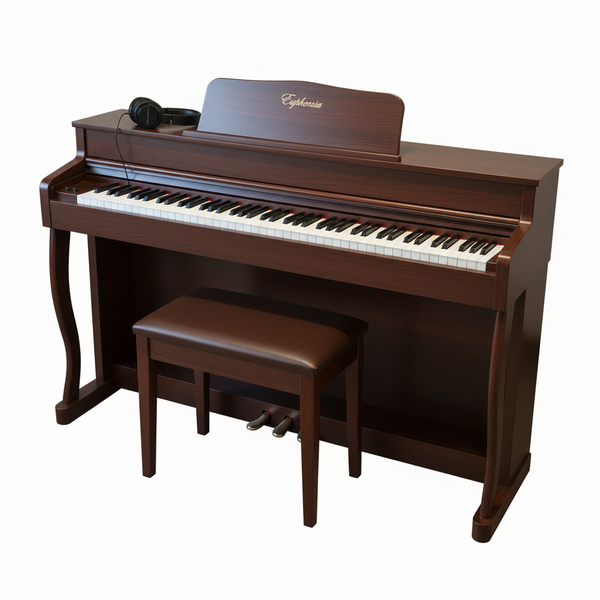
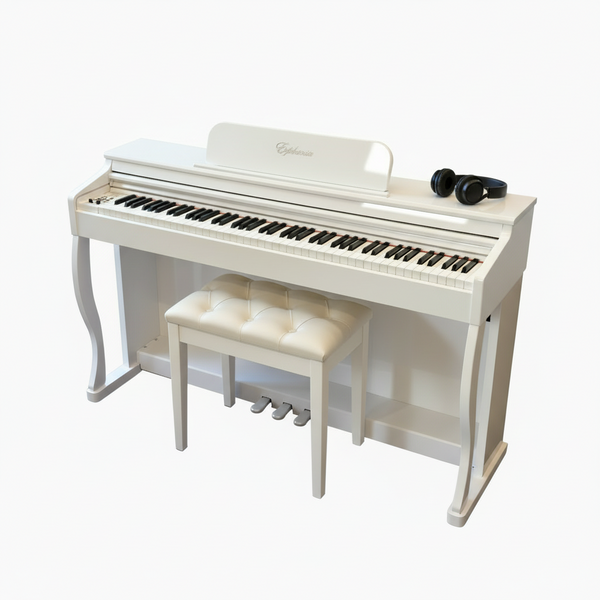
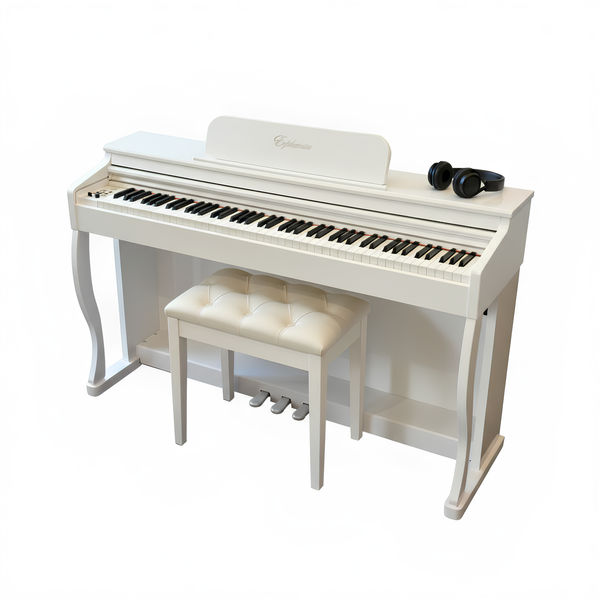
Euphonia pianos are an interesting choice for those who want modern design, an affordable price, and a practical structure suitable for home use. Euphonia pianos are especially suitable for customers looking for a cabinet-style digital piano who are looking at white, black, brown, and glossy color options that match their interior.
Which technical details should you look at when buying a piano?
- Number of keys: An 88-key model is the most correct choice for classical piano education.
- Keyboard type: Weighted and hammer action mechanics feel closer to an acoustic piano.
- Pedal system: Sustain pedal is the minimum requirement, while a triple pedal system is an advantage for more serious playing.
- Sound system: The power and sound balance of the built-in speakers are important for home use.
- Headphone output: Very important for those who want to practice silently at home.
- Bluetooth and USB/MIDI: Useful for practice with apps, computer connection, and studio use.
- Cabinet size: Room area, design, and ease of transport should be considered.
- Color and design: White, black, rosewood, brown, glossy, and matte options should be chosen according to the interior.
- Brand and service: Official product, proper warranty, and after-sales support create long-term peace of mind.
Recommendations for home, music school, and studio
When choosing a piano for home, silent practice, aesthetic appearance, and comfortable use should be prioritized. Cabinet-style digital pianos are very suitable for this purpose: they look beautiful in the interior and allow for headphone practice. In small homes, portable pianos may be more practical.
When choosing a piano for music school, the main issue is durability, correct keyboard feel, and mechanics that form the student's technique. In this case, an 88-key weighted digital piano or an acoustic piano is considered a more suitable choice. When choosing a model for teachers, the pedal system and the dynamic response of the sound should also be considered.
When choosing a piano for studio and stage, portability, output connections, sound quality, and a reliable keyboard come to the fore. USB/MIDI, line out, various tones, and a compact cabinet are serious advantages for stage users. For professional pianists, the touch feel and expressive capabilities of the sound are the primary selection criteria.
How to choose according to budget?
Budget is important when buying a piano, but it is not correct to aim only for the cheapest model. An affordable digital piano can be a good choice for beginners, but models with very weak keyboard mechanics can limit long-term development. In the mid-range budget, it is possible to get a better keyboard, more natural sound, and a sturdier cabinet. In the high budget, acoustic pianos, premium digital pianos, and grand piano models offer a more professional experience.
If the goal is not a short-term hobby, it is better to think about the piano choice for the long term. For a child's music education, serious home practice, stage preparation, and conservatory-oriented use, choosing a slightly higher-quality model can prevent additional costs in the future.
Advantages of choosing a piano at Royal.az
Royal Musical Instruments offers one of the widest ranges of piano, digital piano, acoustic piano, grand piano, and portable piano choices in Azerbaijan. At Royal.az, it is possible to compare models from Roland, Kawai, Casio, Medeli, Pearl River, Euphonia, Ritmuller, Petrof, and other brands, check prices, and make a choice according to your needs.
Royal Musical Instruments is Azerbaijan's #1 musical instrument store. Our store offers more than 2,500 products, official cooperation with more than 60 brands, original products, wide selection, affordable prices, official warranty, professional advice, delivery, and credit purchase opportunities. If you are having trouble choosing which piano model is most suitable for you, the Royal team can help you choose the model that fits your purpose, budget, and playing level.
Conclusion: Choosing the right piano depends more on its suitability for your goal than on the price of the instrument. A comfortable digital piano for beginners, an 88-key weighted model for music school, a high-level digital or acoustic piano for professional playing, a portable and powerful model for the stage, and an acoustic piano or grand piano choice for classical resonance are more advisable. By comparing piano models in this catalog, you can find the most accurate instrument for yourself, your child, your school, your studio, or your stage performance.
Piano selection: official brands and warranty
Correct piano selection should be based on the user's level, practice purpose, space, keyboard feel, sound expectations, and budget. At the Royal Piano Center, it is possible to try digital piano, acoustic piano, digital grand, and acoustic grand piano models and make a comparative choice between official brands.
The only official distributor in Azerbaijan: Royal Musical Instruments is the only official distributor in the country for Kawai, Roland, Medeli, Petrof, Pearl River, Kayserburg, Samick, and Ritmüller piano brands. Products of these brands are offered with original origin, official warranty, and after-sales support. Casio pianos are also on sale at Royal with official warranty and professional selection support.
Main piano brands offered at Royal
- Kawai pianos – Acoustic piano, digital piano, and grand piano options known for Japanese engineering, precise keyboard mechanics, and balanced sound character.
- Roland pianos – Digital piano and digital grand piano models offering modern digital sound technologies, expressive keyboard feel, and wide usage possibilities from home to stage.
- Medeli pianos – Functional, affordable digital pianos and digital grands with a wide model selection for education, home use, and the stage.
- Casio pianos – Digital piano models combining compactness, ease of use, and daily practice opportunities, including the Privia and Celviano families; offered at Royal with official warranty.
- Petrof pianos – Czech-origin acoustic piano and grand piano models representing European acoustic piano tradition, rich timbre, and expressive dynamics.
- Pearl River pianos – Wide variety from acoustic piano to grand piano and digital models, stable construction, and choice options for different budgets.
- Kayserburg pianos – High-level acoustic piano and grand piano series focusing on premium materials, careful production, and concert-oriented sound character.
- Samick pianos – South Korean manufacturing tradition, reliable mechanics, and acoustic piano and grand piano models for home, education, and professional use.
- Ritmüller pianos – Acoustic piano and grand piano options combining a European design approach with modern manufacturing capabilities, featuring clear and balanced sound.
Premium and concert-class collaborations: Royal Musical Instruments also cooperates with prestigious names in the world piano industry such as Steinway & Sons, C. Bechstein, and Bösendorfer. Information about model, order, and project-based selection opportunities for these brands' premium acoustic pianos and concert grand pianos can be obtained from the Royal Piano Center.
Related piano catalogs
all pianos · digital pianos · acoustic pianos · digital grand pianos · acoustic grand pianos · piano prices · piano buying guide
At the Royal showroom, you can test the instrument live, compare the keyboard and sound characteristics of different models, receive professional advice, and select the right product with affordable pricing and credit options.