

What is a Guitar? How to Play a Guitar? Learning Guitar
For many, learning to play the guitar is not just about mastering a musical instrument, but also one of the most beautiful ways to express their feelings. The guitar plays a very important role in solo performances, accompaniment, and within a band. This instrument may seem simple at first glance, but with the right approach, it can be learned in a systematic and enjoyable way. If you are looking for an answer to the question "how to play a guitar?", this article is prepared for you.
Anyone starting to learn guitar should first get acquainted with the instrument. The body, neck, frets, strings, tuning pegs, and resonance structure of the guitar shape its sound character. There are differences between classical, acoustic, and electric guitars in terms of both construction and playing style. For beginners, the comfort of the instrument is very important. The finish, neck thickness, string height, and instrument size directly affect the playing process. Therefore, when choosing a guitar, one should look not only at its appearance but also at comfort and purpose of use.

The first step to playing the guitar is correct posture and hand placement. Depending on right or left-hand dominance, the playing position may differ, but the basic principle is the same. The body should be relaxed, shoulders should not be tense, and the guitar should be held steadily. The left hand should move smoothly over the frets, and fingers should press the strings accurately. The right hand, on the other hand, controls the rhythm, accent, and fluidity of the sound. It is normal for fingers to feel stiff or tense at the beginning. This is a natural phase that passes with time.
The main issue here is not just memorizing the chord, but making it sound clean. To ensure each string sounds correctly, fingers must be placed precisely on the fret. Many beginners worry about string buzzing or some notes being muffled. The cause of this problem is usually incorrect finger angle, unnecessary tension, or rushing.
A sense of rhythm is very important in guitar playing. Some only learn to play chords, but playing without rhythm doesn't sound lively. The correct right-hand movement gives breath to the music. Initially, it is necessary to practice with simple up and down strokes. Then, rhythm patterns, understanding of time signatures, and accent placements are learned. If you want to feel the flow of a song while playing the guitar, practicing rhythm with a metronome is very beneficial. A metronome keeps a steady tempo and strengthens your sense of timing.
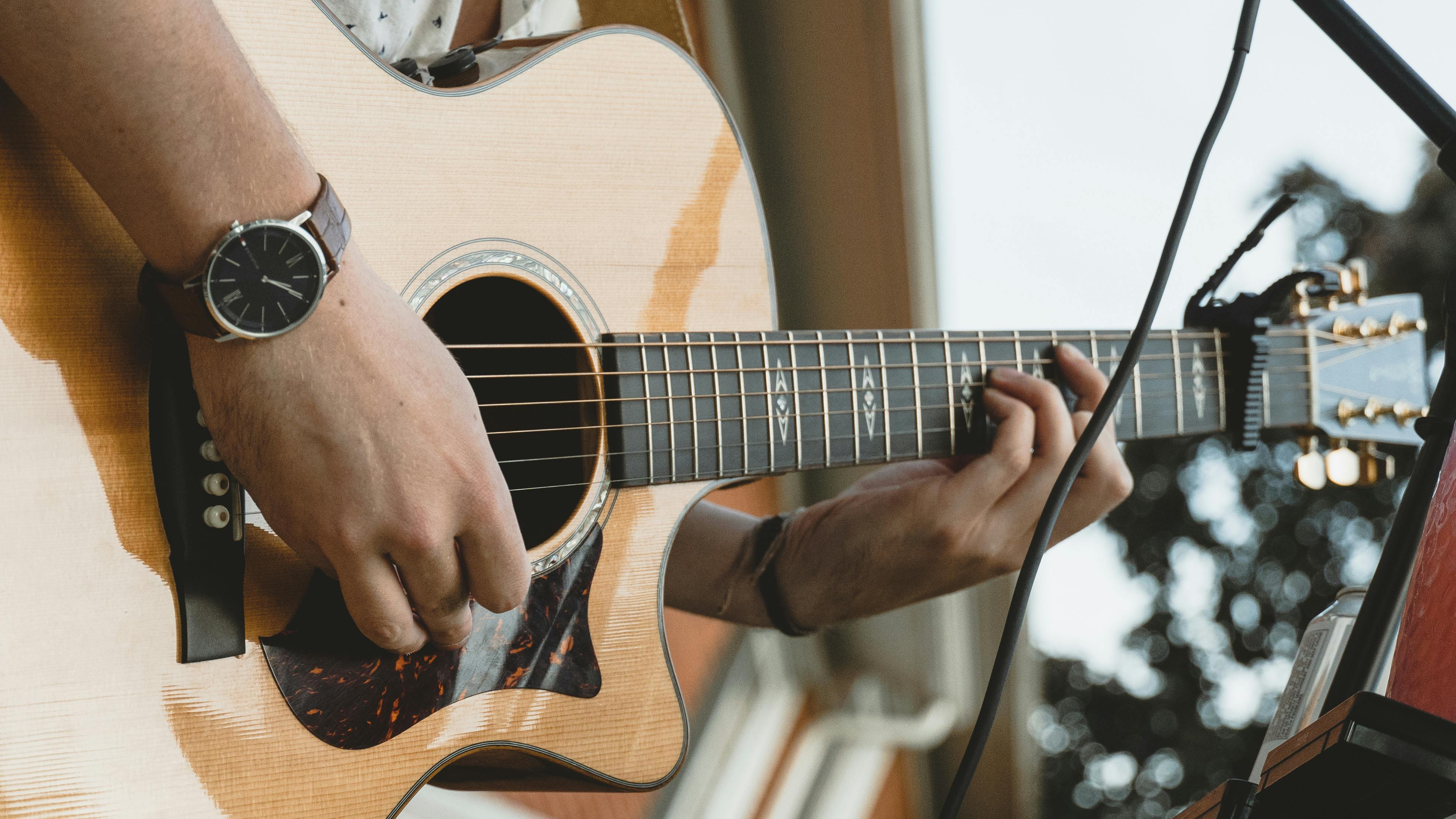
Finger technique is also an important part of guitar playing. In classical guitar performance, fingerstyle technique holds a special place. In this style, each finger performs a separate function, resulting in a richer, more emotional sound. On the other hand, playing with a pick can sound harsher, more rhythmic, and more energetic. Which direction you choose depends on your musical taste and goals. If you want accompaniment and song performance, rhythm guitar might be more suitable for you. If you like melodic and detailed performances, fingerstyle is a very interesting direction.
One of the most common mistakes when learning guitar is expecting results too quickly. Learning a musical instrument develops through persistence, not rushing. Short, but purposeful practice every day is more beneficial than long and unplanned practice. In the initial stage, it is necessary to focus on finger flexibility, transitions between strings, chord changes, and rhythm stability. When practicing, it is better to try to analyze mistakes correctly rather than hide them. This approach leads you to true development.
Another very important point for beginners is choosing the right instrument. Trying to learn with a cheap and poor-quality guitar often reduces enthusiasm. The stiffness of the strings, the uncomfortable neck, and the weak sound quickly tire a person. However, a well-built guitar makes the learning process more comfortable and enjoyable. Choosing the right instrument at a professional music store like Royal.az is very important for both beginners and experienced players. Because a good instrument is part of a good education.
The most important advice for those who want to learn guitar, as a teacher, is not to treat music as a competition. Behind every sound lies technique, ear, and patience. Start with simple chords, feel the rhythm, strengthen your fingers, and then move on to more difficult passages. If you structure this process correctly, the guitar will not just be an instrument for you, it will become a daily means of expression.


